
"bean inspection"
2000 article(s) found

Authentic Jamaica Blue Mountain Coffee Bean production process, Trade and official Certification of Blue Mountain Coffee
Only coffee grown within the Blue Mountain as defined by law can be certified as Blue Mountain Coffee. It is not alpine coffee, Jamaican coffee or a mixture containing blue mountains, but 100% Jamaican blue mountain coffee. Then it is processed in the Mavis Bank coffee factory and needs a long process of inspection and cultivation before it can be received. Real Jamaican Blue Mountain Coffee, officially grown

Ethiopian single bean producing area introduces how to brew Ethiopian single bean.
Professional baristas please pay attention to the coffee workshop (Wechat official account cafe_style) washed coffee accounts for 35% of exports. Good quality washed coffee is processed with freshly picked fully ripe fruit, picked carefully and closely monitored by professionals. The picked clean coffee beans are pulped on the day of picking, then fermented, washed, dried and peeled. Processed

Introduction to the Origin of Ethiopian Coffee by introducing the Flavor and Taste characteristics of Ethiopian Coffee Manor
Due to different processing methods, coffee can be divided into washed coffee (Washed coffee) and sun-cured coffee (Sun-dried coffee). Washed coffee accounts for 35% of exports. Good quality washed coffee is processed with freshly picked fully ripe fruit, picked carefully and closely monitored by professionals. The clean coffee beans picked up will be pulped on the day of picking.
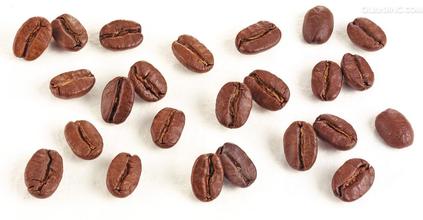
Ethiopian Coffee Flavor and taste introduction to the characteristics of Fine Coffee producing areas in Ethiopia Manor
In July 1991, EGF hosted a national conference with the participation of more than 20 political and ethnic organizations. The meeting adopted the Transitional Charter and elected an 87-member House of Representatives, with EGF Chairman Meles Zenawi as President of the Transitional Government and President of the House of Representatives. A transitional government was established. On May 24, 1993, Eritrea (formerly the province of Eritrea, Ethiopia) adopted

Production and processing of coffee Sidamo guji coffee beans
At present, about 25% of the Ethiopian population directly or indirectly depends on coffee production for a living. The majority of farmers use traditional planting methods. Artificial care of coffee trees, the use of organic fertilizers, do not use harmful pesticides and herbicides, etc. Therefore, most of the coffee produced by Ethiopia is organic coffee. Due to different planting methods, coffee can be divided into forest-semi-forest coffee (Forest or semi-f).

Introduction to the grinding scale of Ethiopia Esopia Lion King coffee bean flavor description method
Ethiopia Esopia Lion King Coffee Bean Flavor description method Grinding scale introduces washed coffee accounts for 35% of exports. Good quality washed coffee is processed with freshly picked fully ripe fruit, picked carefully and closely monitored by professionals. The picked clean coffee beans are pulped on the day of picking, then fermented, washed, dried and peeled. After processing
Coffee export in Pu'er reached an all-time high in the first half of the year.
By the end of June, Pu'er City had exported 15036 tons of coffee beans through Pu'er entry-exit Inspection and Quarantine Bureau, earning 63.6255 million US dollars in foreign exchange, a sharp increase of 6061 tons from 8975 tons in the same period last year, and is expected to break through the 20, 000 ton mark by the end of the year.

Description of characteristics and flavor of Sidamo Lion King Coffee Bean introduction of variety grinding scale by taste treatment method
Flavor description of Sidamo Lion King Coffee beans before the decline in the introduction of the variety grinding scale, coffee exports accounted for more than half of Ethiopia's foreign exchange earnings, but now it accounts for only about 35%. However, according to the International Coffee Organization, coffee prices began to pick up in 2002, rising from 41 cents per pound in September 2001 to 52 cents per pound in 2002 and to every pound in 2003.

Description of characteristics and flavor of Sidamo Lion King Coffee Bean introduction of variety grinding scale by taste treatment method
Flavor description of Sidamo Lion King Coffee beans before the decline in the introduction of the variety grinding scale, coffee exports accounted for more than half of Ethiopia's foreign exchange earnings, but now it accounts for only about 35%. However, according to the International Coffee Organization, coffee prices began to pick up in 2002, rising from 41 cents per pound in September 2001 to 52 cents per pound in 2002 and to every pound in 2003.

Taste characteristics of Ethiopian Coffee Flavor description treatment
Ethiopia's geographical environment is very suitable for coffee growth. Coffee is mainly grown in the southern highlands between 1100 and 2300 meters above sea level. The main coffee producing areas are Harar, Limu, Djimma, Sidamo, Kaffa, Yergacheffe and Wellega. The soil drainage in these areas is good.

Introduction to the grading of Ethiopian Coffee
Sun-cured coffee accounts for 65% of exports. Mainly picked by families, red coffee beans are placed on cement floors or on high tables to dry to about 11.5% humidity, then peeled and cleaned. Coffee grading and quality control system in Ethiopia, coffee grading and quality control system is divided into three levels: producer, regional and national. All coffee is required before leaving the country of origin.

Ethiopian Coffee Manor Flavor description Price planting Environment Brand taste introduction
In December 1994, the Constitution of the Federal Democratic Republic of Ethiopia was formulated. According to the Constitution, Ethiopia will implement a federal system and a parliamentary cabinet system after the general election for a term of five years. After the national election in May 1995, the Federal Democratic Republic of Ethiopia was established on August 22, and Meles became prime minister in her capacity as chairman of the majority party of the people's House of Representatives. On May 14, 2000, Ethiopia held a national meeting

Introduction of Coffee Flavor description and Grinding scale varieties in Shaqiso producing area of Ethiopia
Ethiopian Sidamo Coffee Flavor description Grinding scale varieties taste introduction Ethiopian Sidamo is a type of single origin, growing in Arabica coffee in Sidamo province, Ethiopia. Like coffee in most African countries, Ethiopian Sidamo is characterized by small gray beans, but characterized by its rich, spicy, wine or chocolate-like taste and floral aroma.

Sidamo Lion King characteristic Coffee Bean Flavor description Variety introduction
Sidamo Lion King characteristic flavor description of coffee beans taste treatment varieties introduce sun-cured coffee accounts for 65% of exports. Mainly picked by families, red coffee beans are placed on cement floors or on high tables to dry to about 11.5% humidity, then peeled and cleaned. Before the decline, coffee exports accounted for more than half of Ethiopia's foreign exchange earnings, but now they account for only about 35%.

Yunnan Coffee Story Baker Old Section
Every year, in every season when coffee trees blossom, bear fruit and pick fresh fruits, I will go to Yunnan Lujiangba Gaoligong Mountain, Menghai and other coffee producing areas to inspect, purchase, inspect goods for two or three times, and write down this feeling when I am waiting for a plane at Kunming Airport. I was very moved when I went to Xiaopingtian of Lujiangba this time: a farmer named Lao Duan is sparing no effort to promote Yunnan coffee.

Ethiopian Coffee Boutique Flavor Manor Producing Area Taste Introduction Ethiopian Coffee Brand
1. Limu coffee grows between 1400 meters and 2000 meters above sea level. washed coffee. Excellent quality, with intense nutty aromas, moderate acidity and wine intensity. Annual production of 29,000 tons. Gima coffee grows between 1400 and 1800 meters above sea level. Sunburn coffee. Slightly sour, nutty and long finish. Annual production of 70,000 tons. 3. Gambi Coffee

A brief discussion on the perennial evergreen shrubs of the genus Coffee
1. Summary: coffee is a perennial evergreen shrub or small tree of Rubiaceae. It is native to tropical Africa and has been cultivated for more than 2000 years. The Arabs began to grow coffee in 525 BC, and it was popular for Arabs to stir-fry coffee beans. They began to grow coffee beans on a large scale after the 15th century, and were widely distributed in the tropics and subtropics of Europe, Asia, Africa and Latin America after the 18th century.

Description of Flavor of Yejiaxuefei Coffee Manor introduction of Grinding scale in producing area
Yega Chuefei Coffee Manor Flavor description Taste Variety characteristics of production area Grinding scale introduction of Ethiopian washed Coffee Yega Chefe G1 G2 Cedamo (Yirgacheffe, Sidamo) the highest grades are Grade 2 and Grade 3 (G2, G3), and most of the sun-processed coffee in eastern Ethiopia are Grade 4 or Grade 5 (G4, G5). In many cases, level 4 coffee is marked as level 5 in order to

A brief introduction to the taste description of Ethiopian boutique beans in the most famous coffee producing areas
Flavor description of Ethiopian Sidamo Coffee beans strong floral, fruity, sour and sweet aromas are characteristic of Ethiopia, but the alcohol is slightly thicker or thicker. The biggest disadvantage is that it is easy to bake unevenly, especially sun-dried beans. Even the best Grade3 Harald sun-cured beans often show uneven color, which is the biggest defect of Ethiopian beans, but fortunately it does not affect it.

Ethiopian Coffee Manor Flavor Description Grind Treatment Price Taste Introduction
Currently, about 25 percent of Ethiopia's population depends directly or indirectly on coffee production for their livelihood. Farmers using traditional farming methods predominate. Artificial care of coffee trees, use organic fertilizer, do not use harmful pesticides and herbicides, etc. Most of the coffee produced in Ethiopia is organic. Coffee can be classified as Forest or Semi-Forest Coffee due to different cultivation methods.